Battery maker swings to W407.8b operating profit on strong ESS demand, eyes solid-state batteries for humanoid robots
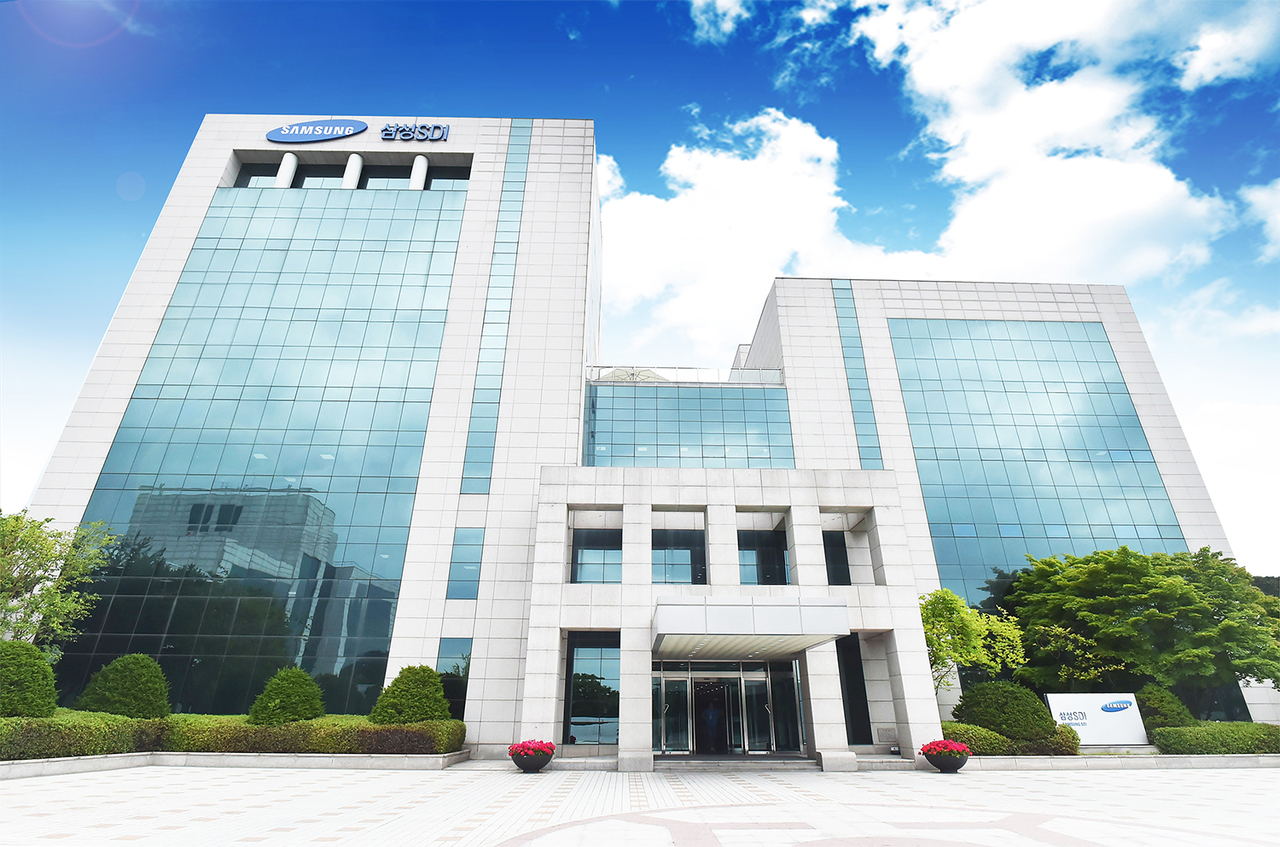
Samsung SDI returned to an operating profit in the third quarter, driven by robust demand for energy storage systems and backup batteries amid the rapid expansion of artificial intelligence data centers.
The South Korean battery maker posted an operating profit of 407.8 billion won ($305 million) for the July-September period, reversing a loss of 591.3 billion won a year earlier, according to a regulatory filing. Revenue jumped 52.6 percent on-year to 4.69 trillion won.
The company’s profit doubled from 203.8 billion won in the previous quarter, marking its strongest quarterly performance since the third quarter of 2023, when profit reached 496 billion won.
The recovery was largely driven by the company’s battery unit, whose revenue climbed 55.3 percent from a year ago to 4.41 trillion won. Operating profit came to 361.9 billion won, reversing a loss in the same period last year.
Samsung SDI credited the improvements to rising demand for ESS and battery backup units as global tech companies expand AI data center infrastructure. Stronger sales of cylindrical batteries used in power tools and electric vehicles also added to the recovery.
The electronic materials division, which produces materials for semiconductors and display panels, reported revenue of 275.7 billion won and operating profit of 45.9 billion won, up 18.9 percent and 18.3 percent, respectively. The performance was boosted by stronger sales of semiconductor patterning materials and display film materials for foldable smartphones.
Looking ahead, Samsung SDI expects to maintain profitability in the fourth quarter, supported by continued growth in its ESS and small battery businesses.
“We expect to remain profitable in the fourth quarter, supported by continued solid growth in our ESS and small battery businesses,” said Oh Jae-kyun, Samsung SDI’s chief financial officer during an earnings conference call Thursday.
The company has accelerated expansion into the US energy storage market as demand rises for locally manufactured batteries.
It has secured ESS battery orders totaling more than 60 gigawatt-hours so far this year and plans to use its Synergy Cells plant in Indiana as the company's ESS battery production base. The Indiana facility, which is under construction, has become Samsung SDI's first wholly owned battery plant in North America after the company acquired General Motors' 49.99 percent stake in their joint venture in August.
The company is also expanding lithium iron phosphate production and has signed long-term agreements with major Korean materials suppliers to secure LFP cathode materials, aiming to meet growing US demand for battery supply chains that are less dependent on China.
Earlier this month, the company began mass production of high-capacity prismatic LFP cells at its StarPlus Energy plant in the US.
In Europe, Samsung SDI has secured an LFP battery project for EVs and is pursuing additional orders.
Samsung SDI is also accelerating the development of its next-generation all-solid-state batteries, targeting mass production next year, with humanoid robots emerging as a key application.
“We are working with multiple customers on humanoid robotics projects, aiming to commercialize all-solid-state batteries in the second half of next year,” said Cho Han-jae, executive vice president and head of battery strategic marketing, at the conference call.
He said the company began supplying samples of all-solid-state battery cells and packs designed for humanoid robots in September, with customers currently evaluating their performance.
“We are repeatedly improving and validating battery performance to meet customer requirements as we finalize product specifications for mass production next year,” he said, adding the company is also working to establish a stable supply chain for key materials, including cathode materials and solid electrolytes.
sahn@heraldcorp.com